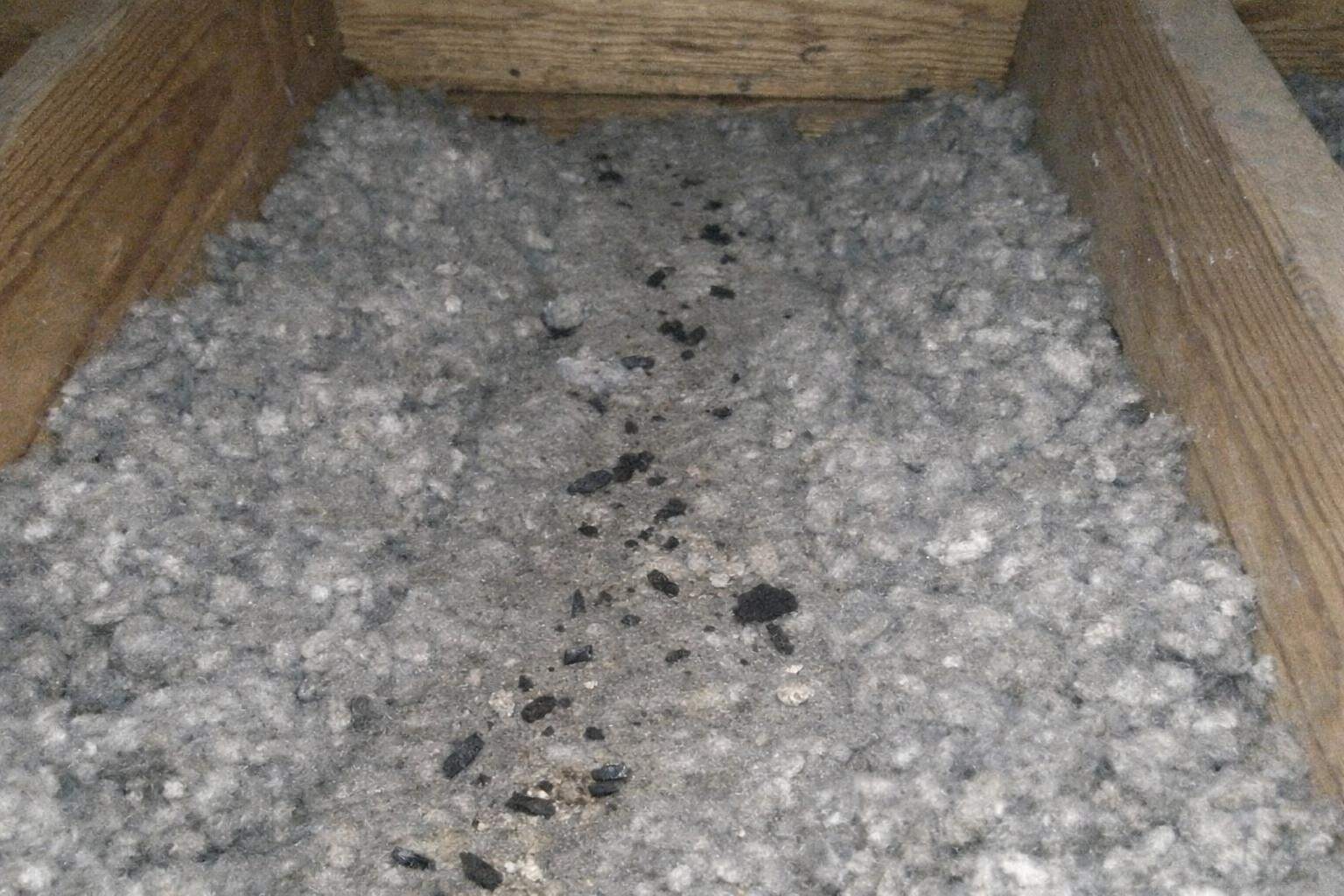
Attic Cleanup and Decontamination in Dallas, TX
Once the rats are out, what they left behind is a separate job: droppings along the runs, nests in the insulation, and urine soaked into blown-in material. Contractors clear it, sanitize it, and price it as its own line.
- Droppings and nests removed
- Soaked insulation out
- Sanitized and documented
What an attic cleanup covers
Cleanup is removal, sanitizing and a judgment about the insulation, in that order.
- Removal: droppings vacuumed from the joist bays and the top plate runs with a filtered vacuum rather than swept, nests pulled out of the insulation, and chewed stored material bagged.
- Contaminated insulation: blown-in fiberglass or cellulose that is urine soaked or compressed into travel runs comes out, either in sections or across the whole attic depending on the spread.
- Sanitizing: the decking, joists, top plates and any hard surfaces treated, with attention to the runs where urine and grease have built up.
- Odor: the residual smell treated at source, since a cleaned attic with nesting material still in a soffit box will keep smelling.
- Documentation: photographs of the condition before and after, which is what an insurer or a buyer's inspector will ask for.
Replacing what came out is a separate scope, on attic insulation replacement. Cleanup with no replacement is a normal outcome where the contamination was limited to one or two runs.
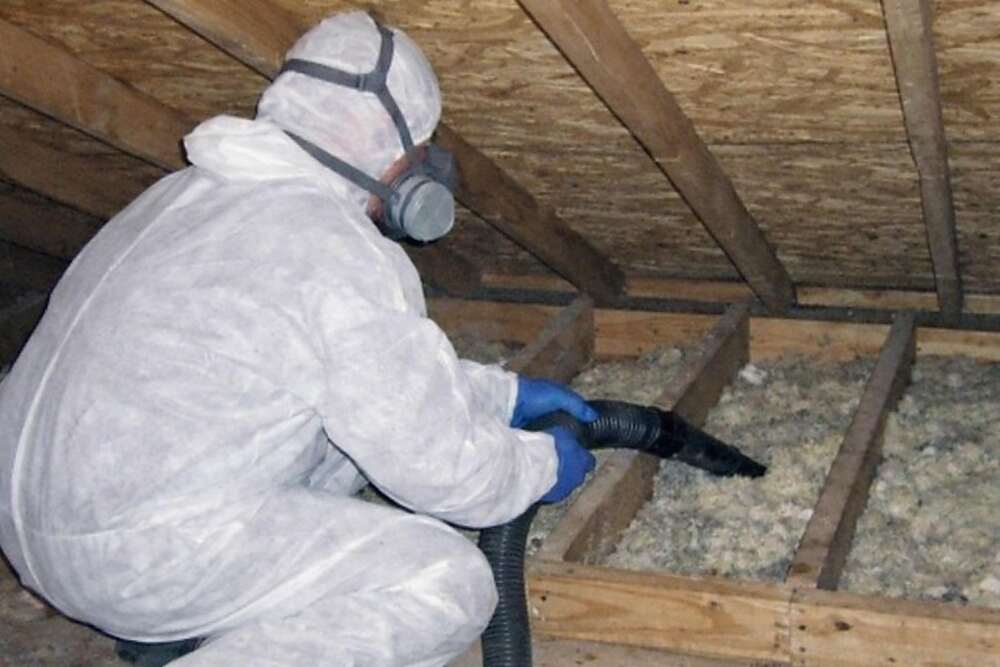
Why the crew wears a respirator and a suit
Dried droppings and urine become airborne dust as soon as anything disturbs them, which is the whole reason for the kit.
The CDC states that rodents carry many diseases, spread directly through contact with urine, droppings, saliva or a bite, and indirectly through fleas, ticks and mites that have fed on an infected rodent. In an attic the direct route is dust. Crawling across joists in blown-in insulation lifts a cloud of fine material off every surface, and that cloud contains whatever was on the surfaces. A half-face respirator, disposable coveralls, gloves and eye protection are the standard answer, and the vacuum is filtered for the same reason.
The indirect route explains one of the more unpleasant aftermaths people describe. Parasites that were living on the rodents stay in the nesting material after the animals have gone, and they go looking for a host. Removing the nests rather than leaving them in place is part of why cleanup belongs in the scope at all.
For a homeowner considering handling it alone, the sensible advice is the same as the trade uses: respiratory protection, wet the material rather than raising dust, bag at the point of removal, and do not sweep. Heat is the other factor in a Dallas attic, where summer temperatures above a hundred degrees outside make a July attic a genuine hazard in its own right.
Does the insulation really have to come out?
Only where it is soaked or compressed, and the two conditions are what the inspection looks for.
Per the Department of Energy, insulation compressed flat no longer performs at its rated R-value and insulation carrying moisture performs badly. Those two findings are the whole test. Blown-in fiberglass or cellulose that has been flattened into a travel run has lost depth permanently, because the material does not recover. Insulation that has taken urine has both a performance problem and an odor problem, and washing it is not an option with loose fill.
What that means in practice is that a light infestation along one joist bay is a spot job: that section comes out, the rest stays, and the depth is topped up where it was disturbed. A heavy case, where runs cross the whole attic and the smell is noticeable from the hatch, is usually a full removal. The inspection should say which, with photographs, because the difference between the two is thousands of dollars.
Dallas adds one local element. Radiant barrier retrofits are common here because of the summer heat, either foil stapled to the rafters or a coating on the decking. A barrier is not insulation and normally stays, although foil that has been chewed or pulled down gets noted. Anything installed over the top of the existing insulation has to come off before removal and is worth asking about.
Will the contractor clean and decontaminate, or only trap?
Trapping and cleanup are different trades, and a quote should show which of them you are buying.
This is the most commonly reported gap in homeowner accounts of rodent work. A pest control company sets traps, the animals stop, the invoice is paid, and the droppings and the nests are still in the attic two years later when the house goes on the market. Neither outcome is dishonest on its own; the problem is an unclear scope. A removal quote that includes attic restoration and one that does not can look similar on paper.
The question to ask directly is whether the price includes removing droppings and contaminated insulation and sanitizing, or whether it covers trapping and sealing alone. Both answers are fine. What matters is knowing, because cleanup priced separately is cleanup you can defer, schedule with an insurance claim, or put out to another contractor.
Here cleanup and insulation appear as their own lines on the itemized quote, with the photographs from the inspection attached, so the decision about the attic is made with the evidence in front of you rather than folded into a single number.
What attic cleanup costs in Dallas
Published national figures put cleanup and decontamination in the high hundreds to low thousands, with the affected area doing most of the work in the estimate.
| Line item | Published band | Source |
|---|---|---|
| Attic cleanup and decontamination | $600 to $2,500 | HomeGuide 2026 national |
| Insulation removal and replacement | $2.50 to $5.50 per square foot | HomeGuide 2026 national |
| Full restoration, heavy case | $3,000 to $10,000 or more | HomeGuide 2026 national |
| Typical Dallas rodent job, removal lines | $224 to $1,192, average near $693 | Angi's Dallas figures |
| Dead animal removal, where one is found | $150 to $500 | HomeGuide 2026 national |
Four things move a cleanup quote. The square footage affected, which is rarely the whole attic. The depth of the existing insulation, because removal is a volume job. Access, since a pull-down in a hallway ceiling is slower to work through than a walk-in from a bonus room. And whether the sanitizing is a spot treatment or a full fog. Summer scheduling is the other factor worth knowing about, because a Dallas attic in July limits how long anyone can stay up there.
Every band above is a typical-job figure and the free inspection produces the actual quote. Photographs are what turn a cleanup line into something you can judge.
What Dallas attics are made of, and why that matters
Blown-in loose fill under a composition shingle roof is the standard construction here, and loose fill is the material rodents damage most.
A typical Dallas attic is a vented space with gable, ridge and soffit vents, a composition shingle roof over plywood or OSB decking, and blown-in fiberglass or cellulose between the ceiling joists. Loose fill matters because it cannot be lifted out and replaced in sections the way batts can: a rat run through it is a permanent channel, nests form inside it rather than on top of it, and urine soaks down to the drywall. That is why cleanup in this market is so often an insulation conversation rather than a surface cleaning conversation.
Radiant barrier retrofits are the second local feature, installed widely because summer temperatures above a hundred degrees drive attic temperatures far higher. A barrier usually survives a rodent problem and stays, but foil that has been torn down along a run gets documented.
The calendar shapes the work too. Mild winters mean breeding runs most of the year, calls surge with the first cool fronts in late September or October, and activity peaks from November through February. By March an attic that has carried animals all winter is at its worst, which is why spring is the busiest cleanup season even though the trapping happened months earlier.
What to ask about a cleanup quote
Five questions separate a documented restoration from a quick pass with a shop vacuum.
- What area is being cleaned? Ask for a square footage figure rather than a description of the attic.
- Is insulation removal included, and how much? Removal is priced by area and depth, so the number should be visible.
- What does sanitizing mean here? Spot treatment of the runs and hard surfaces, or a full fog, are different jobs.
- Are there photographs before and after? This is the one piece of evidence an insurer or a buyer will ask for.
- Are the nests being removed or left? Nesting material left in a soffit box keeps the odor and the parasites.
On credentials, cleanup and decontamination are restoration work rather than pesticide application, so the Texas structural pest control license is not the relevant question unless bait has been part of the plan. Texas regulates structural pest control through the Texas Department of Agriculture and rodents are expressly within its scope, so any contractor placing bait must hold a TDA license under a business with a TPCL number, while live trapping and nonpesticidal barrier work are exempt under Occupations Code section 1951.058. The contractors we route hold a TDA license where the work requires one. Ask for proof of insurance on any job that involves a respirator, a vacuum and a truck full of bagged material.
Who attends and how the dispatch is handled is on the about page, and the hours and address are on the contact page. Dead rodent removal is the page for a smell with no known carcass.
Services that usually run alongside this one
A Dallas rodent job is a sequence of separate lines on one quote, and these are the pages for the steps around this one.
- Attic Insulation Replacement: Taking out compressed, contaminated insulation and blowing in fresh material.
- Roof Rat Removal: Trapping the attic rat that dominates Dallas, sequenced with sealing the roofline.
- Dead Rodent Removal: Tracing the smell to the cavity, taking the animal out, then closing the way it came in.
The order these steps run in is set out on the about page, and a dispatcher will talk it through on the phone at whatever hour you call.
Clearing droppings from an attic
How contaminated material is taken out.
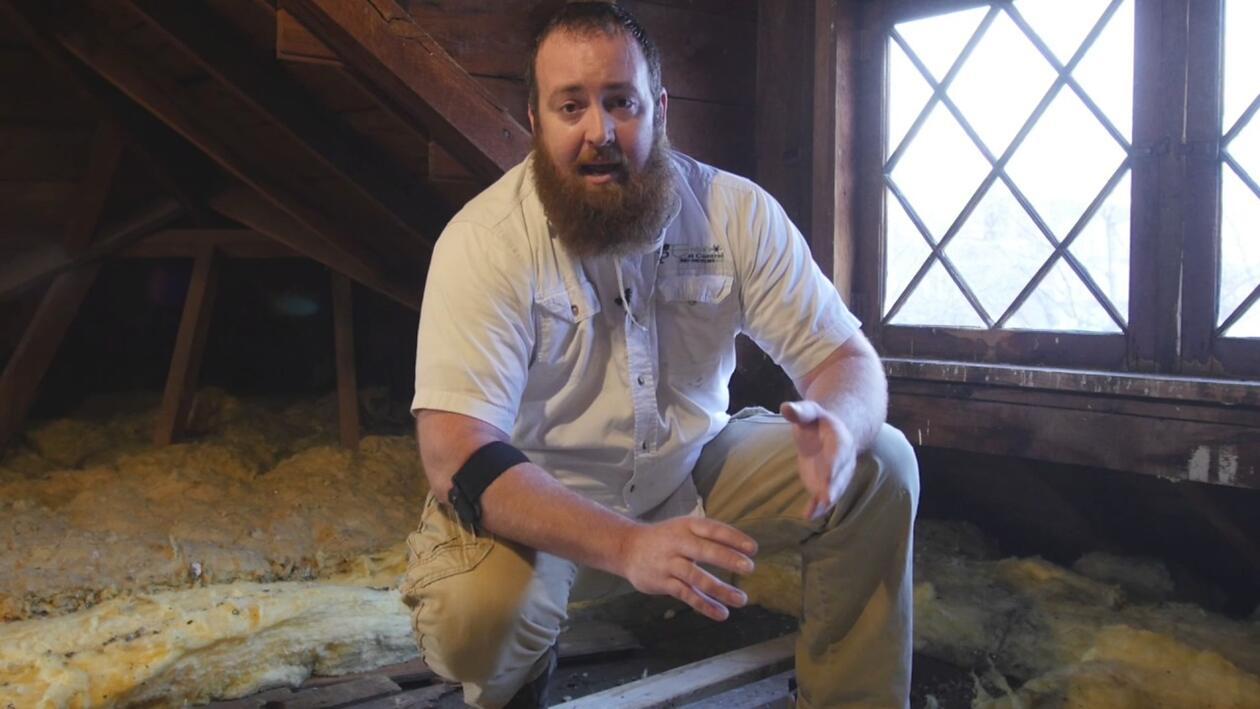
Video: How to Clean Up Animal Droppings In Your Attic, from Erdye's Pest Control.
How an attic cleanup runs in Dallas
Cleanup follows the trapping and the sealing, because an open attic is an attic that gets re-contaminated.
-
Confirm the attic is closed
Cleanup is scheduled after the trap line has gone quiet and the openings have been sealed, so the work is done once rather than twice.
-
Photograph and measure
The affected area is measured and photographed before anything is touched, which sets the square footage on the quote and gives an insurer something to read.
-
Remove
Droppings vacuumed with a filtered unit rather than swept, nests pulled from the insulation, chewed stored material and soaked loose fill bagged at the point of removal.
-
Sanitize
Decking, joists, top plates and the travel runs treated, with the soffit boxes and wall cavity tops checked for nesting material that would keep the odor.
-
Document and hand back
After photographs, a note of what was removed and what was left, and a recommendation on whether insulation depth needs restoring.
Why Dallas homeowners route attic cleanup through us
Cleanup is the line most often skipped and the one a future buyer looks at.
Two conditions decide what comes out
Crushed loose fill falls below the R-value printed on its bag and damp loose fill performs badly, both per the Department of Energy, and a Dallas attic of blown-in material is judged on nothing else. Material flattened into a travel run has lost depth for good, and material that has taken urine cannot be cleaned. Everything else stays, gets topped up where it was disturbed, and appears on the quote as an area figure rather than a guess.
US Department of Energy on compressed and wet insulation
Vacuumed and bagged at source
The CDC describes rodent disease spreading directly through contact with urine, droppings, saliva or a bite and indirectly through fleas, ticks and mites that fed on an infected rodent. In an attic that translates into dust, so the crawl across the joists is done in a respirator and coveralls, the droppings are vacuumed with a filtered unit rather than swept, and the soaked loose fill goes into bags where it lies instead of riding through the house in an open tub.
CDC on direct and indirect rodent disease transmission
Photographs before and after
A cleaned attic looks like an attic, which is a problem when a claim or a sale depends on what was there. The condition is photographed before anything is disturbed and again at the end, the affected square footage is recorded, and the list says what was removed and what was left in place. That record is what an adjuster reads, and it is the starting point for a clearance letter if a closing needs one.
HomeGuide 2026: attic cleanup and decontamination $600 to $2,500 nationally
What Reddit Says About Cleaning Up After Rodents
Cleanup is where homeowner threads get specific about money, because it is the line people most often discover they did not buy.
The complaint that dominates is scope. Posters describe paying a pest company, watching the trapping succeed, and finding out later that droppings and contaminated insulation were never part of the deal. The advice that follows is to ask the question in plain words before signing: will you clean and decontaminate, or only trap. People also warn about the reverse, where a restoration figure is folded into a removal quote and the homeowner cannot tell what either part cost.
The second theme is the aftermath nobody warned them about. Rodent mites and other parasites left behind in nesting material come up repeatedly, described as a second problem arriving two weeks after the first one was solved, and the advice is always to have the nests physically removed rather than left in place. Smell is the other one. People describe a cleaned attic that still smelled until somebody opened a soffit box and found the nest.
Insurance comes up more here than anywhere else in these threads, and the consistent recommendation is photographs. Posters who documented the condition before the work describe a smoother claim; posters who did not describe being asked for evidence of something that has since been vacuumed. Several mention that rodent damage coverage varies and is worth checking before assuming.
Cost spread gets discussed with the same disbelief as elsewhere, with similar attic work quoted from a few hundred dollars to tens of thousands. The defense people name is a square footage figure and an itemized scope rather than a description.
The contractors we route schedule cleanup after the attic is sealed, quote it by affected area as its own line, remove nesting material rather than leaving it, and photograph the attic at both ends of the job.
A typical attic cleanup after a winter of roof rats in Lake Highlands
The situation: a 1960s brick ranch on a slab, trapped out in February after three months of noise. The attic is quiet and sealed, and there is a faint ammonia smell at the pull-down along with visible droppings on the decking near the hatch.
What gets done: the measure finds contamination across roughly 240 square feet of a 1,700 square foot attic, concentrated in three runs from the sealed soffit return toward the center. Photographs are taken from four positions. Droppings are vacuumed with a filtered unit, two nests are pulled out of the loose fill, and the flattened and urine stained fiberglass along the three runs comes out in bags. The decking, joists and top plates along the runs are sanitized, and a nest is found and removed from the top of a wall cavity behind the soffit box on the same elevation, which is where the smell was coming from.
How it turns out: the smell is gone within a couple of days. The remaining insulation is sound but shallow along the cleared strips, so topping up the depth is quoted separately on the insulation page rather than sold as part of the cleanup, and the owner keeps the before and after photographs for the house file.
Cleanup questions from Dallas homeowners
What people ask once the trapping is finished.
Scope and safety
Can I clean the attic myself?
A small area is within reach for a careful homeowner, with caveats. Wear a respirator rather than a dust mask, coveralls and gloves, dampen the material instead of raising dust, bag at the point of removal, and do not sweep. The CDC describes rodent disease spreading directly through contact with urine, droppings, saliva or a bite and indirectly through parasites that fed on an infected rodent, so dust control is the point. The practical limits are heat, since a Dallas attic in summer is dangerous, and loose fill, which cannot be spot cleaned the way batts can.
How long does an attic cleanup take?
A spot cleanup of two or three runs is usually a single visit of a few hours. A full removal and sanitize on an average Dallas attic runs one to two days, depending on insulation depth, access and the time of year, since summer limits how long anyone can stay up there. Scheduling follows the sealing, because cleaning an attic that is still open means doing it twice.
Will the smell go away on its own?
The urine smell fades slowly and the nesting smell does not, which is why nests get physically removed. A cleaned and sanitized attic with the nesting material taken out usually clears within a few days. A smell that persists after a thorough cleanup generally means material left in a soffit box, at the top of a wall cavity or in a duct chase, or a carcass that was never found, which is covered on dead rodent removal.
Insulation and claims
Will insurance pay for the attic restoration?
Coverage for rodent damage varies a great deal between policies, so the answer has to come from your own. What makes a claim possible either way is documentation, which is why the condition is photographed before anything is disturbed and the affected square footage is recorded. HomeGuide's 2026 national figures put attic cleanup and decontamination at $600 to $2,500 and a full restoration at $3,000 to $10,000 or more, and an adjuster will want evidence rather than a total.
Does the radiant barrier have to come out?
Normally it stays. Radiant barrier retrofits are common in Dallas attics because of the summer heat, and a foil layer on the rafters or a coating on the decking is not insulation and does not absorb urine the way loose fill does. Foil that has been chewed or pulled down along a run gets documented and can be re-stapled or patched. Anything laid over the top of the existing insulation has to be lifted before removal, which is worth raising at the quote stage.
Still have a question? Call (214) 203-5726 and ask.