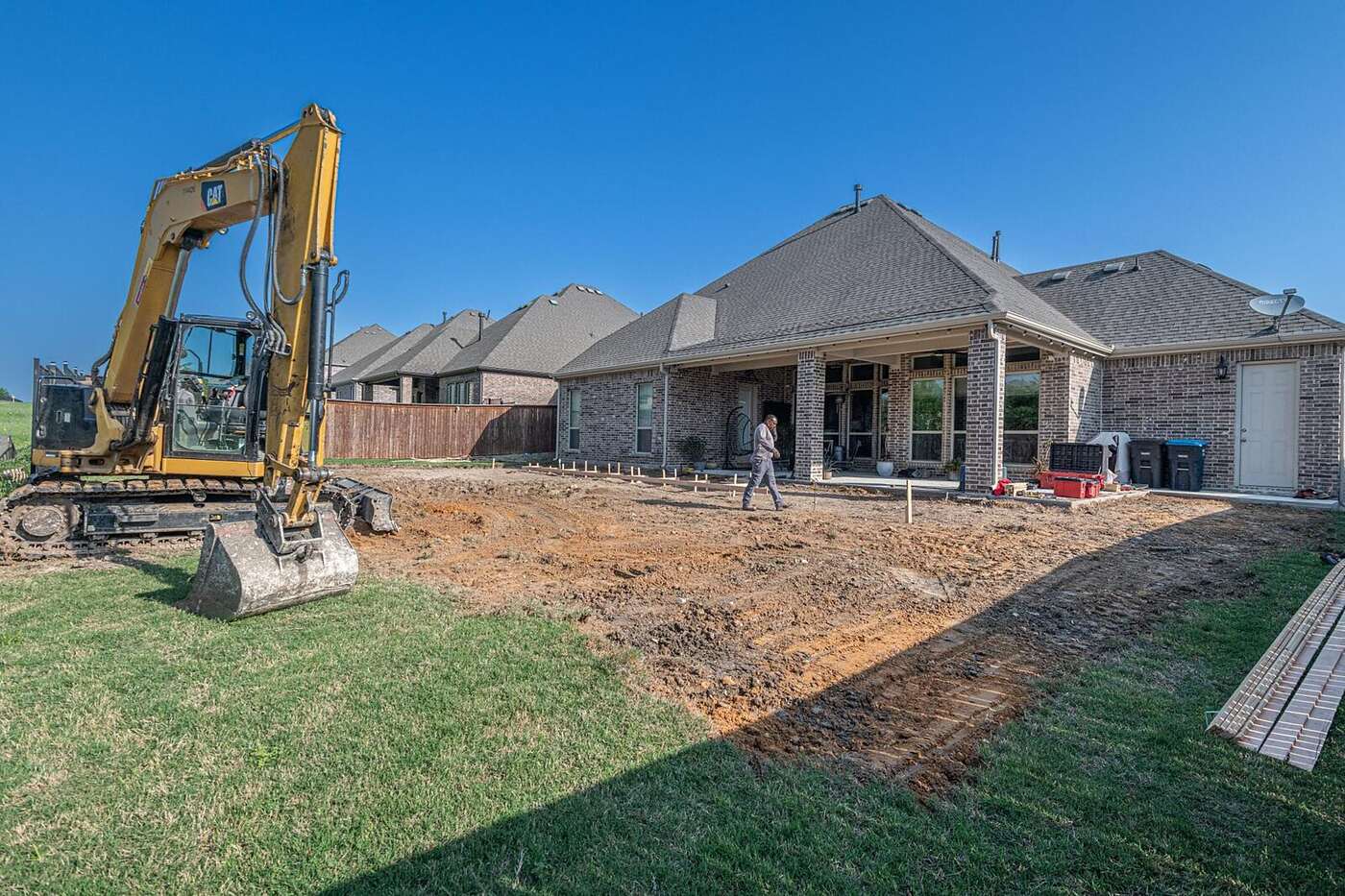
Rodent Removal in Frisco, TX
Frisco is mostly newer than the rodents that find it. A house built in the last twenty years arrives with soffit returns boxed but unsealed and stacks without collars, and the fields at the edge of each phase supply the animals.
- New-build roofline gaps
- Field and creek edges
- Collin and Denton coverage
Free Inspection in Frisco
The free inspection on a Frisco house is mostly a roofline inspection, with the base course and garage counted at the same time. A ladder goes to every soffit return, dormer cheek and roof plane junction, the attic gets entered and the droppings read for species and freshness, the brick base course gets its weep holes counted, and the garage door seal and jambs get checked for daylight. Every opening a quarter inch or wider is listed with a location and a material, and an itemized quote follows with trapping, sealing and any cleanup priced separately.
Frisco sits about twenty-eight miles north of downtown Dallas, up the Dallas North Tollway or US 75 and across, which keeps it inside the normal dispatch radius. The phone is staffed 24 hours a day and inspections are booked from 7am to 7pm, any day. Call or send the details through the contact page and a dispatcher rings back with a slot.
New construction arrives with openings already in it
A new house is not a sealed house, and in a city that has built almost continuously since 2000 that is the central local fact.
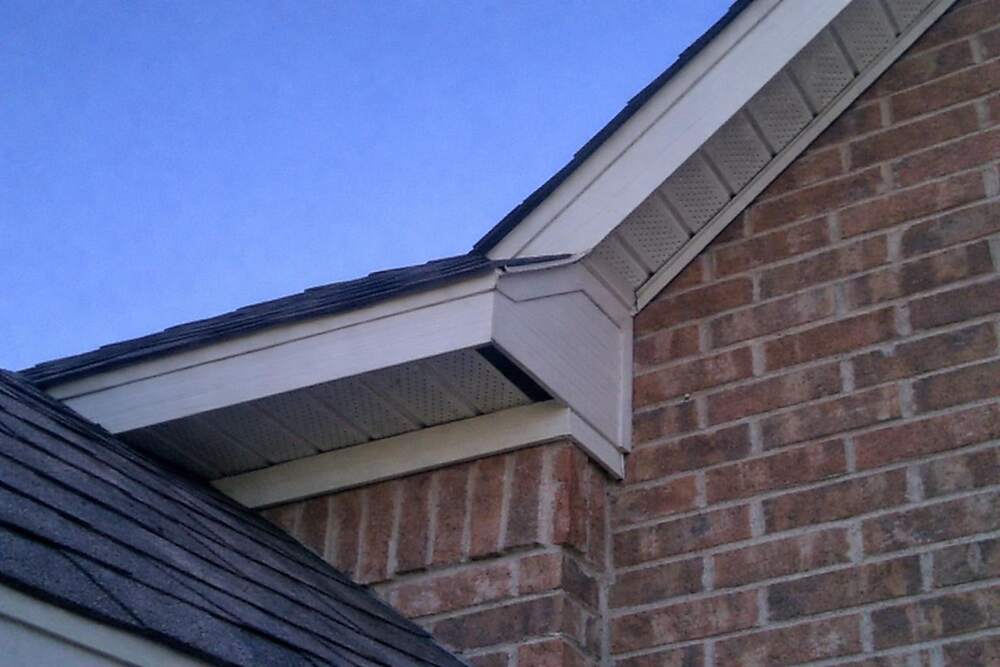
Production building leaves a consistent set of gaps that no buyer inspects and no warranty visit revisits. Soffit returns, the boxed corners where soffit meets a gable wall, are commonly closed with a panel and left open behind it. Plumbing stacks pass through the roof decking without a metal collar. Where two roof planes meet at different heights, a builder gap is left under the upper plane. Ridge and gable vents are screened with material that is fine against birds and loose against rodents. Garage door seals are cut to the opening rather than to the slab, which settles.
Expansive clay then does the rest. North Texas soil swells and shrinks through the year and moves foundations regardless of a house's age, opening gaps at slab edges and utility penetrations on a five-year-old house as readily as on a fifty-year-old one. The sealing window local firms name is late August through September for that reason, after a summer of movement.
The practical point for a Frisco owner is that a first rodent call is usually not a maintenance failure. It is the original construction being found, and the repair is carpentry and metal on a closure list rather than a claim. Rodent exclusion is that scope.
The field edge at the end of each phase
Frisco's growth has left subdivisions bordering open ground, and that border is where the animals come from.
A street that backs onto an undeveloped tract, a farmed field, a creek corridor or a construction phase that has been graded and left is a street with a reservoir behind it. Ground-dwelling Norway rats and house mice live in those edges and move into the nearest structures, reaching buildings under garage doors and through broken weep holes. Active construction makes it sharper still, because grading and trenching displace whatever was living in the soil and the nearest finished houses are the obvious alternative.
The tree factor cuts the other way here. Canopy in the newer phases is young, planted rather than inherited, and rarely reaches a roofline, which means roof rats have less of a road into a Frisco attic than into a Lakewood one. The older core near downtown Frisco is the exception, with established trees and some houses that predate the growth era.
So the typical Frisco job leans toward ground-level work, with the weep holes, the garage door and the slab edge doing more of the job than the eave. Mouse removal is the service that comes up most in the newer phases.
What We Handle in Frisco
Five services cover nearly every Frisco call, weighted toward sealing rather than trapping because the houses are newer.
- Rodent exclusion: the soffit returns, stack collars, plane junctions, weep holes and garage door seal closed to a quarter inch.
- Mouse removal: snap traps in the kitchen and garage voids, which is the common call on a street backing onto open ground.
- Rodent inspection: the free roofline and base course walk, with the opening list and a written quote.
- Roof rat removal: attic trapping, most relevant in the older core and wherever planting has reached the roof.
- Commercial rodent control: restaurants, retail and office space along the tollway corridor, with the device map and service log an inspection expects.
A Typical Frisco Job
The situation: a 2011 two-story brick house on a street whose back fence line faces a graded tract awaiting its next phase. Mouse droppings behind the range and in the garage, a gnawed bag of dog food, and nothing audible in the attic.
What gets done: the base course on the fence-line elevation has twenty-eight uncovered weep holes and the slab edge has opened at a hairline under the patio door threshold. The garage door bottom seal sits proud of the settled slab at the hinge end, and the condensate line penetration has never been collared. Runs show along the garage wall plate and through the plumbing chase behind the dishwasher. The weep holes take covers, the door gets a new bottom seal and jamb seals, the condensate penetration is collared with mortar and metal, and the threshold gap is closed. Snap traps go behind the range, under the sink, in the chase and along the garage plate. The roofline check finds two soffit returns open behind their panels, which are closed as well.
How it turns out: six catches across four days, one at the second check, nothing at the third. The under-sink cabinet and range cavity are vacuumed and sanitized as a separate line, and the closure list comes to thirty-four items.
What This Costs in Frisco
Sealing is the larger half of most Frisco quotes, and the published bands give you something to measure a number against before anyone arrives.
| Line | Band | Source |
|---|---|---|
| Whole-house exclusion sealing | $500 to $2,500 | HomeGuide 2026 national |
| Trapping and removal | $250 to $1,200 | HomeGuide 2026 national |
| Typical rat job across the Dallas area | $224 to $1,192, average near $693 | Angi's Dallas figures |
| Inspection fee where a company charges one | $100 to $200, no charge here | Angi's Dallas figures |
| Attic cleanup where it is needed | $600 to $2,500 | HomeGuide 2026 national |
Newer houses tend to land in the middle of the sealing range rather than the top, because the roofline is in good condition and the openings are construction gaps rather than decades of decay. What pushes a Frisco figure up is a two-story with a complex roof and several plane junctions, a long brick run on two or three elevations, and a garage door that needs jambs as well as a bottom seal. These bands describe typical jobs, and the free inspection converts them into a quote for your address.
Rat holes around a building
What a burrow looks like, and where it leads.
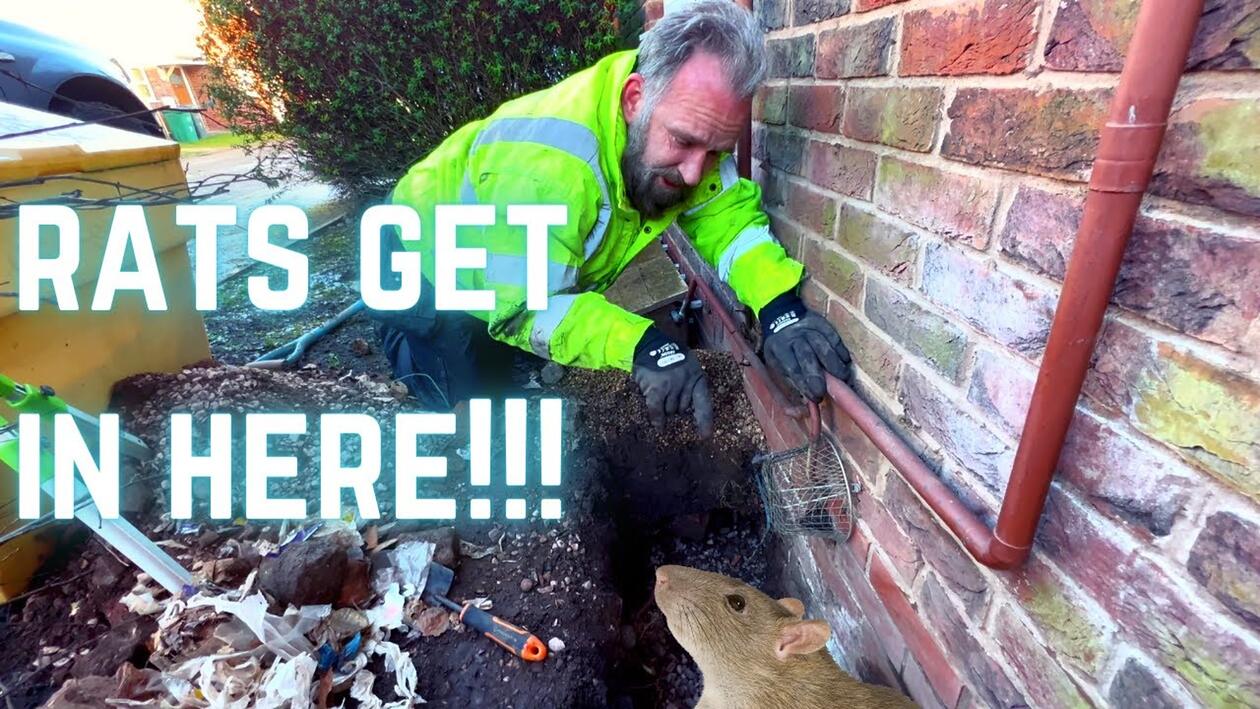
Video: RAT holes around your house? How to stop rats burrowing, from Pest Interceptors.
Common Questions in Frisco
What callers from Frisco ask before booking.
A newer house
My house is only twelve years old. How are rodents getting in?
Through gaps the house was built with. Production building regularly leaves soffit returns boxed but open behind the panel, plumbing stacks through the decking without a metal collar, a gap where two roof planes meet at different heights, and a garage door seal cut to the opening rather than to a slab that has since settled. Expansive North Texas clay then moves the structure regardless of its age and opens gaps at slab edges and penetrations. The repair is carpentry and metal rather than a builder warranty claim.
Do I really need the openings repaired, or can I get away with trapping?
Trapping clears the animals in the house and does nothing about the supply. On a street backing onto a graded tract or a field, the outside population is permanent, so a trap line goes quiet and the droppings reappear a month or two later, usually after the first cool front. Sealing is also cheaper on a newer house than on an older one, because the openings are few and in good condition. The closure list is where the lasting value sits on a Frisco quote.
Species and season
Is it rats or mice out here?
In the newer phases it is more often mice and ground-level Norway rats than roof rats, because the canopy is young and rarely reaches a roofline. House mice leave small droppings where they feed, inside cabinets, behind appliances and in the garage. Roof rats leave droppings a quarter to half an inch long with pointed ends in lines along an attic top plate, per UF/IFAS, and make noise overhead after dark. The older core near downtown Frisco, with established trees, sees more of the second kind.
When is the best time to have a Frisco house sealed?
Late August through September, which is the window local firms name. A hot summer dries the clay, moves the slab and opens gaps at its edges and at penetrations, so that is when the full opening list is visible. The first cool fronts in late September or October are what drive animals indoors, and activity peaks from November through February. A call in midwinter still gets handled; it starts with trapping and ends with the closures rather than being closures alone.
Still have a question? Call (214) 203-5726 and ask.
Nearby Areas We Serve
The same contractors cover the towns around Frisco, and the service area runs across Collin and Dallas counties and the rest of the metro.