Rodent Removal in Casa Linda
Casa Linda has been building since 1939, which means one street can hold a pier-and-beam house from the forties and a slab ranch from the sixties. The foundation decides the job, so the inspection starts by establishing which one you have.
- Piers and slabs side by side
- Large wooded lots
- Free inspection, written quote
Two building eras on the same street
Casa Linda spans the exact period when Dallas changed over from piers to slabs, so the housing is mixed.
Development began in 1939 on the east side of White Rock Lake and carried on through the post-war decades, with Casa Linda Estates and the surrounding streets filling in over twenty or thirty years. Dallas houses built before roughly 1965 are mostly pier-and-beam with a crawl space, and almost everything after 1970 is slab-on-grade, which places the earliest Casa Linda houses firmly in the pier era and the later ones firmly on concrete. In between sits a decade of either.
That matters because the two foundations fail in different places. A pier-and-beam house has a whole perimeter under the floor, skirting between piers, foundation vent screens, an access door and subfloor penetrations, on top of whatever the roofline offers. A slab house has none of that and instead offers the weep holes along the brick base course, the garage door seal and the gaps that expansive clay opens at slab edges and utility penetrations.
The practical instruction is simple: the inspection establishes the foundation before anything else, because the opening list changes completely. The physical tell is a skirting wall with vents and an access panel for piers, brick running to a visible concrete edge for slab.
Large lots, heavy canopy and detached structures
Casa Linda lots are generous by Dallas standards and the trees on them are old enough to reach the roofs.
Wider lots mean more set-back, more planting and more outbuildings: detached garages, workshops, sheds, pool equipment housings and guest quarters. Every one of those is a structure with its own openings, and an unscreened shed with bagged fertilizer or birdseed inside is the reason a sealed house keeps being tested. The canopy is the other half. Live oaks, red oaks, pecans and cedar elms planted in the 1940s and 1950s now have limbs at or above roof height, and UF/IFAS describes the roof rat as arboreal, moving along limbs, wires and fences, and ranging about 150 yards from its den.
The lake is close enough to matter on the western streets. White Rock Lake Park brings wooded shoreline, creek inlets and permanent water within a short run, which supports a background population that never depends on anyone's building.
So the inspection on a Casa Linda property is wider than the house. Limb clearance off the roof plane, fence line and cable contact, shed and garage openings, and anything stored outside that feeds rodents all go on the list alongside the closures.
How the work runs on a Casa Linda property
Establish the foundation, walk every structure, then seal either side of the trapping.
On a pier-and-beam house the visit covers the roofline from a ladder, the attic, the crawl space from underneath, and the outbuildings. On a slab house the crawl space is replaced by the brick base course, the weep hole count, the garage door seal and the utility penetrations. In both cases the attic reading is the same: droppings along the top plate, read for species and freshness, with roof rat droppings running a quarter to half an inch long with pointed ends per UF/IFAS.
The closures then go in the usual order. Openings with no current traffic first, which buys the trapping a narrower house. Snap traps on the live runs for at least a week, since roof rats are wary of new objects. Last openings closed after two consecutive empty checks. Limb clearance and shed closures in the same program, because those are the supply rather than the symptom.
A mixed-era neighborhood also means mixed renovation history, and additions put on a 1940s house in the 1980s are usually slab, leaving a seam between two foundation systems at grade. That seam is worth asking about specifically. The scopes are described on rodent exclusion and crawl space rodent control.
Buying or selling on these streets
A Casa Linda transaction frequently turns up rodent evidence in a home inspection report, because the houses are old enough and the trees are big enough.
An inspector who goes into the attic of an eighty-year-old house under a pecan canopy will often find droppings, and a finding like that becomes a negotiation item whether or not there is current activity. The useful distinction is freshness. Dark soft droppings mean a live problem; pale dry crumbling ones mean a historic one. A house with only historic evidence and nothing open is a sealing job rather than a trapping job, and that is a smaller number and a better conversation.
What makes either case manageable is documentation: a list of the areas walked, the evidence and its apparent age, the openings found and what was closed with what material, and dates on every visit. That is the content of a clearance letter, covered on rodent clearance letters, and almost nobody in the Dallas market offers one.
Sellers on these streets are better off dealing with it before listing. Buyers are better off asking for the closure list rather than a treatment receipt.
A representative job element on a Casa Linda lot
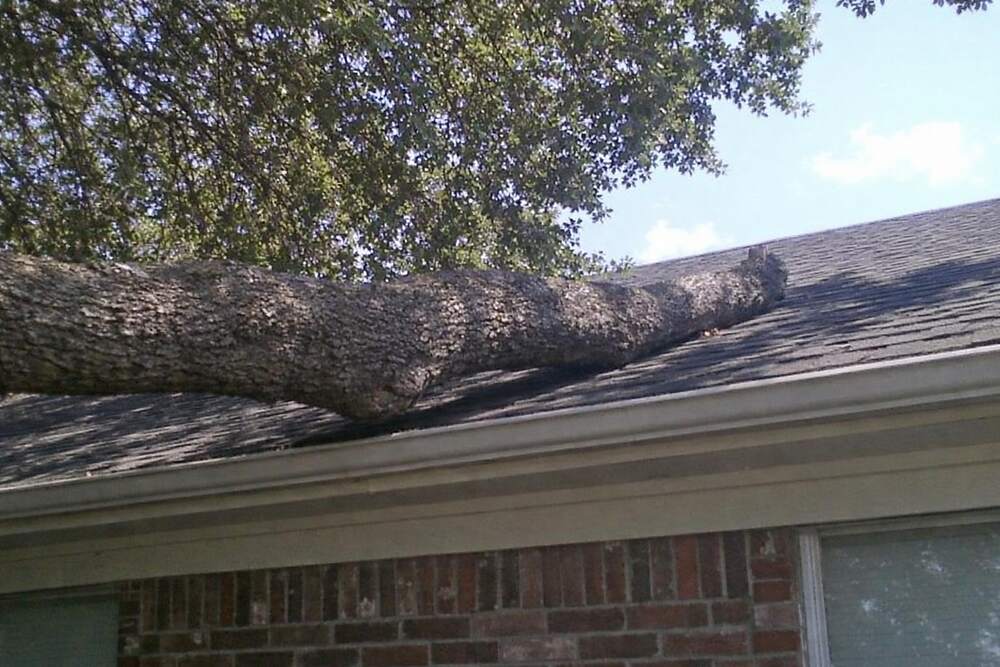
The element that most often decides a Casa Linda job is the limb resting on the roof plane.
On a wide lot with a live oak or a pecan planted seventy years ago, a lower limb commonly lies across the back slope of the roof or passes within a foot of the fascia. That contact is a road rather than a nuisance: UF/IFAS describes the roof rat traveling along limbs, wires and fences, and puts its range at about 150 yards from the den, so the animal arriving at a soffit return may be living in a neighbor's tree two lots over. The clearance is a cut back off the roof plane with a clear gap left, rather than a reshaping of the tree, and on these lots it is usually the cheapest line on the quote and the one that does most for the result.
A common Casa Linda call
The situation: a 1950s single-story house on a deep lot with a detached garage and a tool shed at the back, two blocks from the lake. No noise in the attic, but droppings along the garage wall plate, a chewed bag of sunflower seed in the shed, and the dog digging at the skirting on the east side.
What gets done: the foundation turns out to be pier-and-beam, with a 1980s slab addition on the back. The crawl finds fresh droppings on the sill beam at the east elevation, one skirting gap at a pier bay, a rusted foundation vent screen, and a gap at the seam where the slab addition meets the original skirting. The shed has no door sweep and an open soffit at one end; the garage has an inch under the door. The vent and the seam are closed first, then the shed and garage, and traps go on the sill run and the garage wall plate. The sunflower seed is moved to a metal bin and two pecan limbs are cut back off the garage roof.
How it turns out: five catches in the first week, one at the second check, nothing at the third. The skirting gap is closed on the close-out visit, the attic is confirmed clear with no cleanup needed, and the owner keeps a closure list of seven items with materials.
Casa Linda rodent questions
What callers from these streets ask most.
The house and the lot
How do I find out whether my house is on piers or a slab?
Look at the base of the house and at the build date together. A skirting wall with rectangular vents and an access panel on a side or back elevation means pier-and-beam with a crawl space. Brick or siding running down to a visible concrete edge, with no vents, means slab. Dallas houses before roughly 1965 are mostly pier-and-beam and almost everything after 1970 is slab, and Casa Linda spans that change, so a 1940s house and a 1970s house three doors apart will need different work.
Do the shed and the garage really matter?
On a deep lot they often matter more than the house. An old shed or detached garage with a gap under the door, an open soffit and bagged feed or birdseed inside is shelter and food within a short run of the building you care about, and Norway rats stay at ground level and use exactly those openings. The fix is a door sweep or threshold strip, mesh at the open soffit, and the stored material moved into metal containers. Each outbuilding gets its own closures on the quote.
Evidence and paperwork
My home inspector found droppings. Is that an active problem?
Not necessarily, and the age of the droppings is what answers it. Dark and soft means current; pale, dry and crumbling means the animals were there and have gone. Rub marks are the other test, since a route in use leaves dark greasy smears at the lip of an opening. Roof rat droppings run a quarter to half an inch long with pointed ends per UF/IFAS, which identifies the species at the same time. A house with historic evidence and nothing open is quoted as sealing rather than trapping.
What paperwork will a buyers agent accept?
Yes. A written record naming the areas walked, the evidence found and its apparent age, the openings closed with the material at each one, and dates on every visit including any trap checks, is what a buyer's agent or a lender will accept. That is the clearance letter described on rodent clearance letters, and nobody ranking in this market offers one. Book the inspection early in the transaction rather than in the closing week, since active trapping has to finish first.
Still have a question? Call (214) 203-5726 and ask.
The order an attic job runs in
Five stages, from inspection through to cleanup.
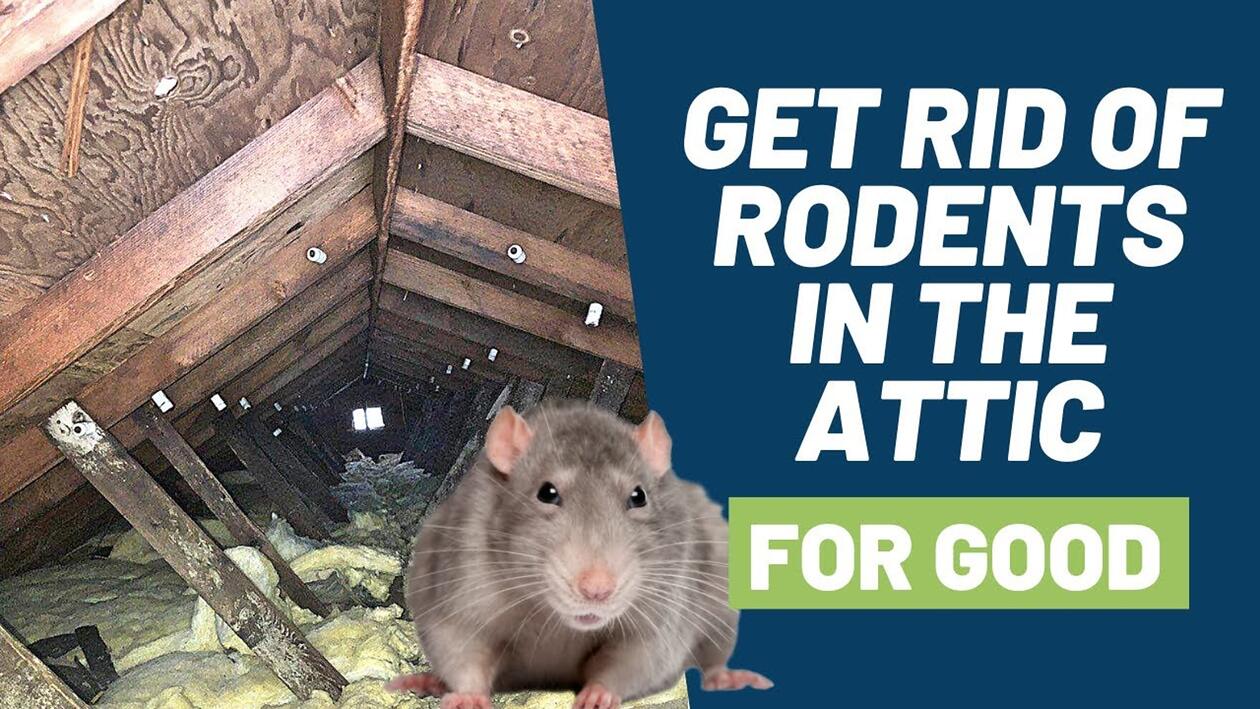
Video: 5 Step Solution to Get Rid of Rodents in Your Attic, from Atticare Construction.
Why Casa Linda homeowners book through us
Three things that matter where the housing eras are mixed.
Foundation settled before pricing
Casa Linda has been building since 1939, which straddles the Dallas changeover from piers to slabs around 1965 to 1970, so one street holds both. The opening list is entirely different for each: skirting, vents, access door and subfloor penetrations on a pier house, weep holes, slab edge and garage door seal on a slab. The inspection settles which you have before anything is priced, and additions built later on an older house get checked at the seam between the two systems.
Dallas: pier-and-beam before about 1965, slab-on-grade after 1970
Every structure on the lot walked
Wide Casa Linda lots carry detached garages, workshops, sheds and pool equipment housings, and an unscreened shed holding bagged feed or birdseed is why a sealed house keeps being tested. Each outbuilding gets its own closures on the list, and anything stored outside that feeds rodents is named rather than sealed around. Norway rats stay close to the ground and enter under doors and through broken openings, which describes an old shed accurately.
A quarter inch is the rat-proofing standard, UF/IFAS Extension
Freshness separated from history
On houses this age an attic will often hold old evidence, and calling that an infestation inflates a quote by thousands. Dark soft droppings are current and pale crumbling ones are not, and rub marks show which openings are in use today. Roof rat droppings run a quarter to half an inch with pointed ends per UF/IFAS, which is what identifies the species at the same time. A house with history and nothing open is quoted as sealing alone.
UF/IFAS Extension on roof rat dropping size and shape